prijava
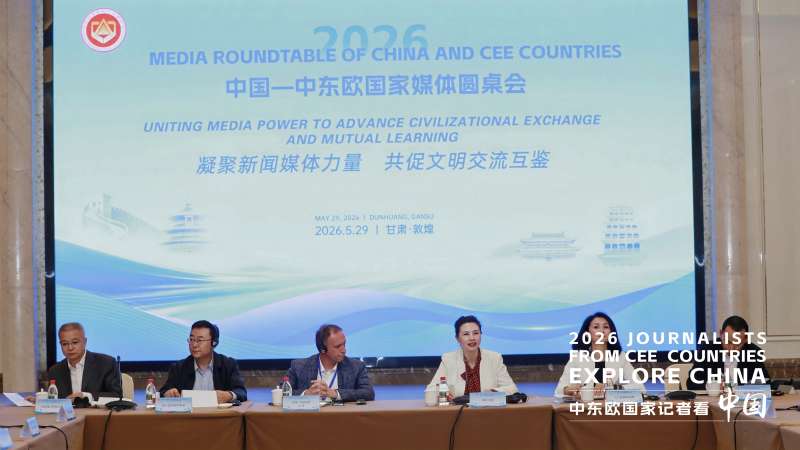
DUNHUANG, May 29 (FENA) – A China and Central and Eastern European (CEE) Countries Media Roundtable was held in the Chinese city of Dunhuang under the slogan ''Uniting Media Power to Advance Civilizational Exchange and Mutual Learning''.
This important international gathering brought together representatives of leading Chinese national media outlets, local journalism associations, and prominent editors and journalists from Europe.
The opening speech was delivered by Wu Xu, Executive Secretary of the All-China Journalists Association, that also hosted the event.
Participants were also addressed by the Editor-in-Chief of the Federal News Agency, Dejan Jazvić, who led a delegation of journalists from 12 Central and Eastern European countries during a multi-day visit to China.
In his remarks, based on everyday work with facts that shape public discourse, Jazvić emphasized that we live in an era of unprecedented technological connectivity and rapid information exchange that crosses borders faster than ever before. However, he stressed that such power also comes with enormous responsibility.
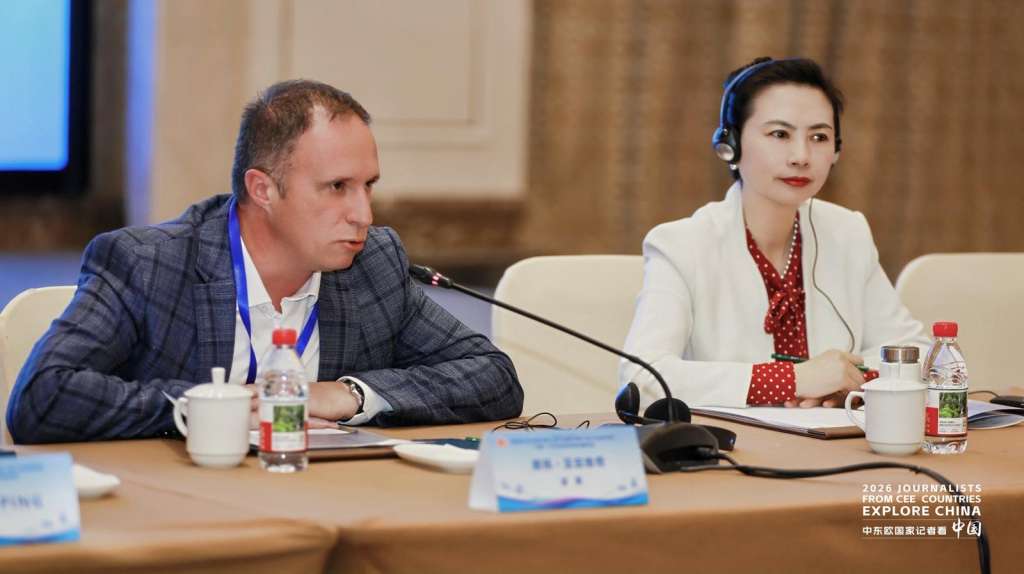
''Media can either deepen divisions or build bridges. When media, storytellers, and audiences unite around thoughtful and inclusive reporting, they become a powerful force for mutual understanding among peoples and civilizations,'' Jazvić said.
He explained that shared media platforms, through news, documentaries, and social media, have the power to bring distant lives closer and humanize them. By portraying ordinary human stories, family gatherings, and everyday concerns, media can break down entrenched stereotypes more effectively than abstract arguments.
According to Jazvić, this helps people stop being seen as ''faceless caricatures'' and instead become neighbors who share the same hopes and aspirations—something crucial in a world facing common global challenges such as climate change, migration, and economic transformation.
Speaking about relations between China and the countries of Central and Eastern Europe, including the Western Balkans, Jazvić pointed to the rapid growth of trade, investment, and cultural exchange. In this context, he stressed that media cooperation plays an irreplaceable role in conveying authentic voices and providing context for events.
Jazvić also proposed concrete areas for cooperation, such as joint reporting on infrastructure projects to help the public understand both technical details and local priorities. He additionally highlighted the importance of cultural programs and exchanges of students and journalists.
''When such stories appear regularly and responsibly, they reshape public perception and create informed dialogue at both the citizen and political levels,'' he said.
Jazvić underlined three core principles that should guide unified media influence. The first is accuracy, requiring fact-checking and avoidance of sensationalism. The second is pluralism, meaning different voices, including critics, minority groups, and independent experts, must be heard. The third key principle is transparency, meaning audiences should clearly know who produces media content and for what reasons.
''When these standards are respected, media become the foundation for resilient relationships built on understanding rather than suspicion,'' Jazvić said.
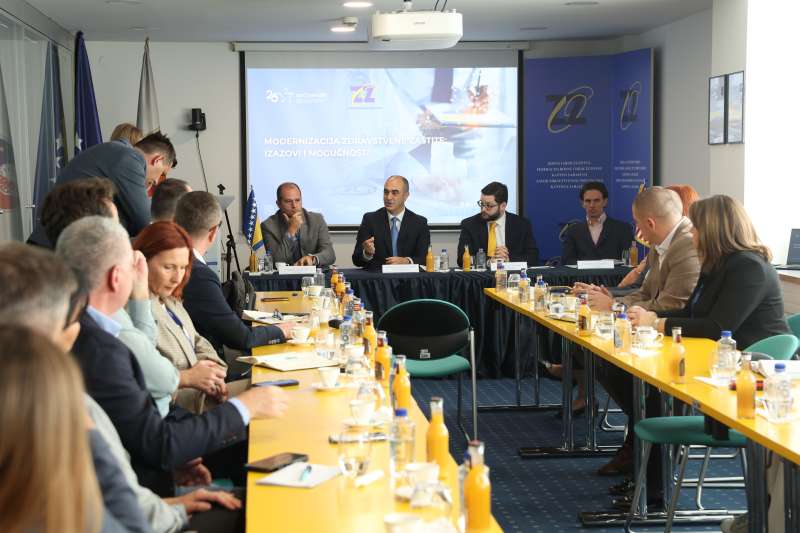
During the roundtable discussion, participants reflected on the key challenges facing modern journalism. It was emphasized that, in times of global tensions, media must never become instruments of confrontation. Participants further stressed that serious and responsible journalism provides necessary balance in international relations and that geographic distance is no longer an excuse for a lack of cooperation among countries.
Special attention was also given to the technological revolution. Participants agreed that the influence of artificial intelligence in media is growing, but shared the view that the human factor, ethics, and journalistic integrity remain essential and irreplaceable.
At the conclusion of the gathering, participants stressed that mutual understanding is not a passive outcome but an active process, emphasizing the need to open more channels of communication. It was also concluded that media organizations should invest more in education and joint editorial initiatives to ''transform distant strangers into partners in addressing shared challenges''.
(FENA) A. B.