prijava
SARAJEVO/ISTANBUL, November 26 (FENA) – Although seasonal summer and winter tourism traditionally dominate global tourism statistics and trends, millions of travel enthusiasts visit archaeological sites around the world, wishing to see and silently imagine the traces of human civilization, to witness the remnants of places where ancient civilizations lived—their customs, ways of life, and creations.
One of the countries that carefully and systematically preserves, protects, restores, and strives to return authenticity to these traces, safeguarding archaeological heritage, whether it involves religious or residential buildings, sites of mass gatherings and entertainment, or defensive fortresses and walls, is the Republic of Türkiye.
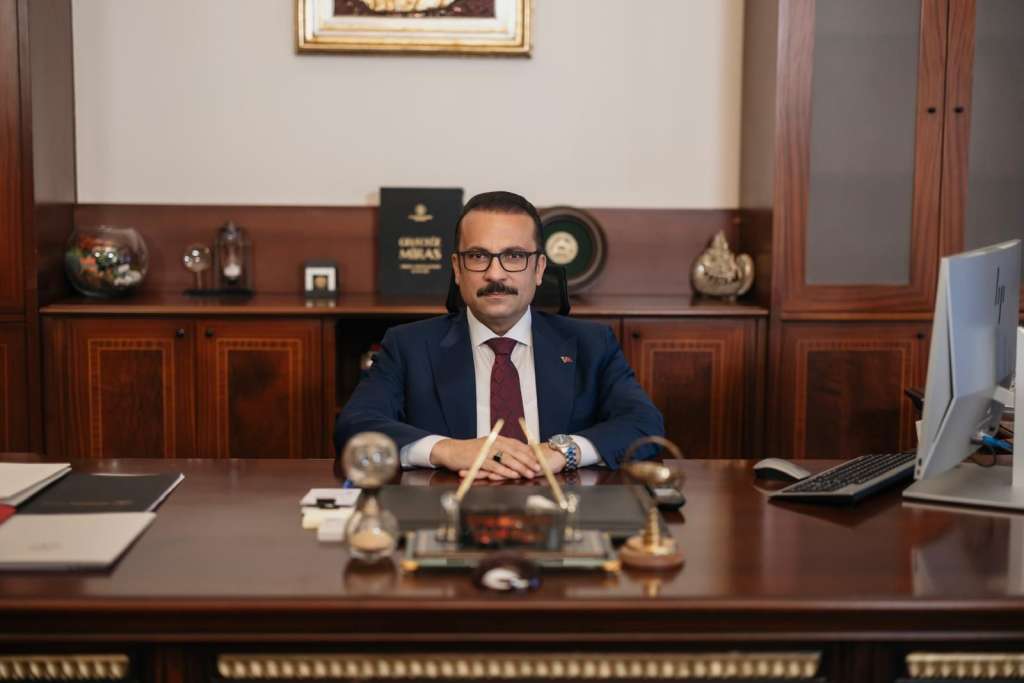
Birol Inceciköz, Director General of Cultural Heritage and Museums at the Ministry of Culture and Tourism of the Republic of Türkiye, spoke to FENA about the Ministry’s efforts to preserve archaeological heritage and showcase the country’s historical and cultural landmarks, with a particular focus on the hidden archaeological treasures of western Anatolia in the Denizli, Uşak, and Burdur regions.
Inceciköz recalls that Anatolia, where various civilizations intersected since prehistoric times, was home to some of the world’s oldest settlements and the site of numerous historical events, and that today it abounds with the unique treasures of ancient cultures.
''The wealth of these regions is gradually being uncovered through archaeological excavations carried out throughout the year whenever conditions allow, under the guidance of the Ministry of Culture and Tourism. By conducting numerous excavations and restoration projects to ensure the sustainability of cultural heritage, Türkiye has become an attractive global center for archaeological research,'' emphasized Inceciköz.
The City of Hierapolis, an Archaeological Wonder of Denizli, has been on UNESCO’s List since 1988.
One of the significant sites where archaeological work is ongoing is Hierapolis in Denizli.
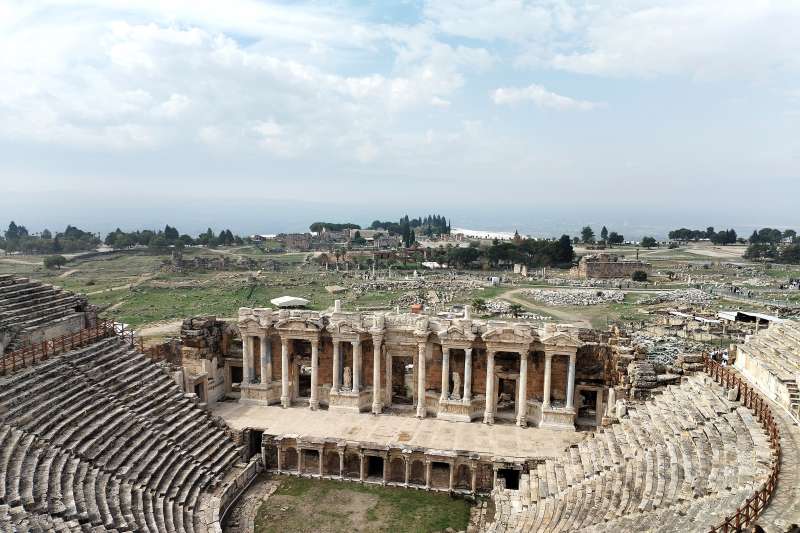
Historical records stopped mentioning Hierapolis after the 15th century, despite its prominence for many years. Although the site fell into obscurity for some time, travellers rediscovered the city in the 17th century onwards. Afterwards, numerous researchers and explorers began to provide information about the site. Following the first scientific publications on the city in the 1800s, systematic excavations and studies at Hierapolis began in 1957. In 1988, Hierapolis was inscribed on the UNESCO World Heritage List.
Denizli’s other archaeological marvel is Laodikeia. After accounts from the ancient period, the earliest sources mentioning this site date back to the 14th century. Laodikeia began hosting scholars and scientific visitors in the 17th century. The first archaeological excavations at the site were conducted during two campaigns between 1833 and 1843.
Another notable archaeological area is the Tripolis Ancient City in Denizli, located at the intersection of the ancient regions of Lydia, Caria, and Phrygia. With settlement layers extending back to the Late Neolithic/Early Chalcolithic period, the site offers a valuable chronological sequence for understanding regional cultural development.
''Today, the most impressive remains date from the Roman Imperial era, particularly the first to third centuries AD, including its colonnaded streets, bath structures, and hydraulic systems. Current excavations and conservation efforts, carried out under the direction of Prof. Dr. Bahadır Duman, continue to reveal crucial evidence of the city’s architectural organisation and public life, while contributing to the Ministry’s broader objective of enhancing accessibility and presenting the scientific findings to international audiences within a contemporary heritage-management framework,'' stated Birol Inceciköz.
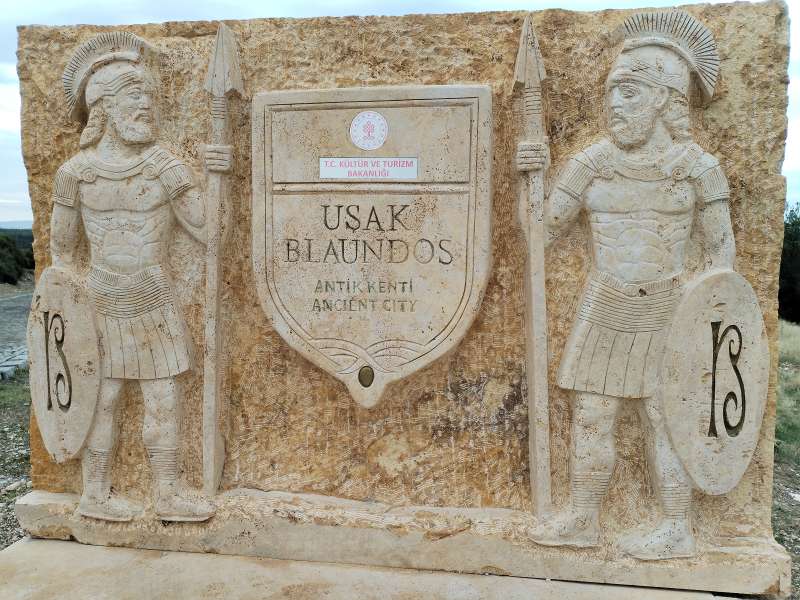
In addition to these prominent sites, Türkiye is also home to lesser-known archaeological treasures that offer invaluable insights into ancient civilisations. One hidden gem is Uşak’s Blaundus Ancient City. Initially believed to be the ancient city of Klannouda when it was first discovered in 1833, the site was later identified as Blaundus. In 1835, an ancient inscription unearthed at the site confirmed that the city was indeed not Klannouda but Blaundus.
Another significant yet less-visited archaeological marvel is Sagalassos in Burdur, which is on the UNESCO World Heritage Tentative List.
It offers visitors its 5,000 years of history and the opportunity to see the Antonine Fountain, one of the rare fountains functioning today. Early records related to the city date back to the early 18th century.
Although the ancient city was first visited during this period, it was identified as Sagalassos through an inscription in 1824.
Similarly, the ancient city of Kibyra in Burdur Province stands out as one of Türkiye’s most remarkable archaeological heritage areas, renowned for its monumental character and commanding topography over the Gölhisar Plain.
The city hosts an impressive array of Roman-period public buildings, including a stadium of considerable scale, an odeion famed for its Medusa mosaic, an agora, and extensive water-management installations.
''Systematic excavations and conservation programs—led by Prof. Dr. Şükrü Özüdoğru—adhere to internationally recognised scientific standards and continue to shed light on the city’s urban evolution, engineering techniques, and cultural significance. These efforts strengthen Türkiye’s commitment to safeguarding its archaeological patrimony while promoting broader global recognition of Kibyra’s unique historical identity,' said Inceciköz.
Türkiye: A leading destination for archaeotourism
Since the 19th century, during the Ottoman period, the lands of Anatolia have been the scene of archaeological excavations. With the founding of the Republic of Türkiye, the growing importance attached to archaeology led to more extensive and systematic archaeological work. The number of excavations increased steadily; their findings were published, museums were established in many cities, and state institutions began to provide significant support for archaeological activities.
Building on these important developments, Inceciköz emphasizes that Türkiye today has developed a highly advanced archaeological culture and stands as a leading archaeotourism destination, thanks to its exceptional excavation and conservation efforts.
Türkiye declared 2024 the ''Golden Age of Archaeology'' raising the number of archaeological works to 765. The number is expected to reach 800 by 2026.
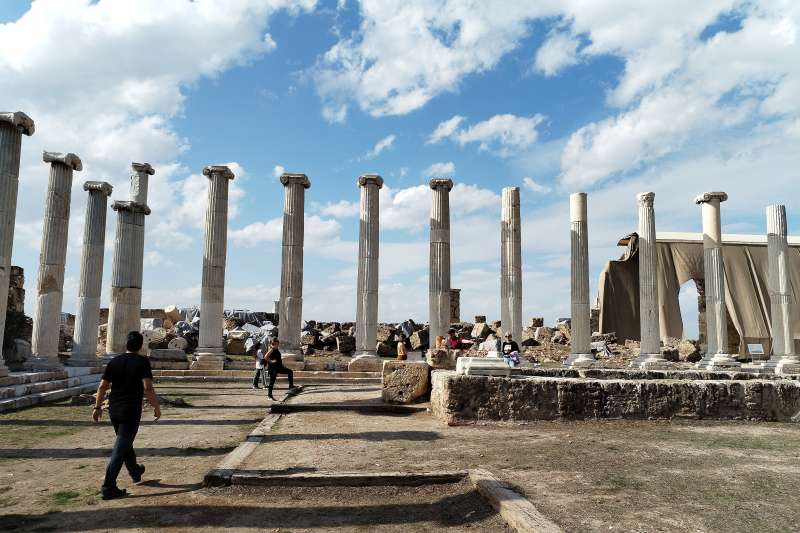
Additionally, under the Heritage to the Future Project, Türkiye has extended the excavation season at archaeological sites. Whenever conditions allow, archaeologists conduct continuous fieldwork throughout the year, dedicating the remaining time to the academic processing and documentation of their findings. With the support of universities’ archaeology departments and qualified academic teams, the country has also enhanced its professional capacity in this field, ensuring the continuity of professional expertise.
Enhanced cooperation with international experts
Thanks to its rich historical heritage, Anatolia has long drawn significant interest from foreign researchers. In this regard, by cooperating with foreign experts, Türkiye continues to contribute to the advancement of archaeology while promoting international collaboration to ensure the sustainability of its cultural heritage.
For example, there are sites in the country where archaeology teams from prominent universities around the world conduct excavations. In these areas, Turkish teams work in harmony with excavation teams from foreign universities, working together to shed light on the history of Anatolia.
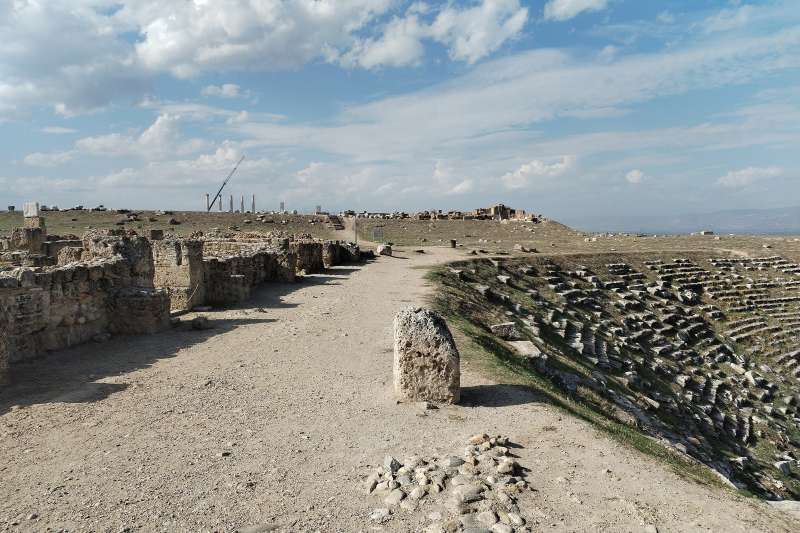
Within the framework of the Heritage to the Future Project, comprehensive excavation and restoration work continues at the ancient cities of Pamukkale-Hierapolis and Laodikeia.
Excavations at Hierapolis are led by Professor Grazia Semeraro, while work at Laodikeia is overseen by Professor Celal Şimşek. Excavations at Blaundus in Uşak are directed by the Uşak Museum Director Şerif Söyler. Professor Peter Talloen leads excavations at Sagalassos, one of the best-preserved ancient cities.
Archaeological sites in Türkiye attracted 21.6 million visitors in eight months
The number of visitors to Türkiye’s museums and archaeological sites continues to rise steadily each year. In the first eight months of 2025, a total of 21,610,964 people visited museums and historic sites across the country.
Denizli’s Hierapolis-Pamukkale Site welcomed 2,372,395 visitors in 2024, ranked third nationwide among the most-visited museums and archaeological sites in Türkiye. During the first eight months of this year, the site attracted 1,613,357 visitors, placing it second among the list of the country’s most-visited museums and historic sites.
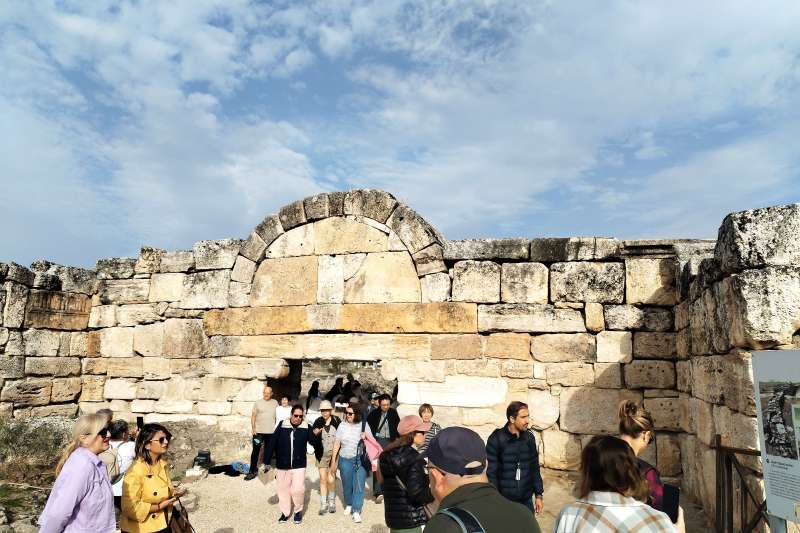
In addition to the UNESCO-listed Hierapolis, Laodikeia received 138,673 visitors in 2024. 131,509 people visited the ancient city from January to October 2025. Similarly, Sagalassos, which welcomed 114,327 visitors in 2024, recorded 121,022 visitors during the January–October 2025 period.
(FENA) A. B.