prijava
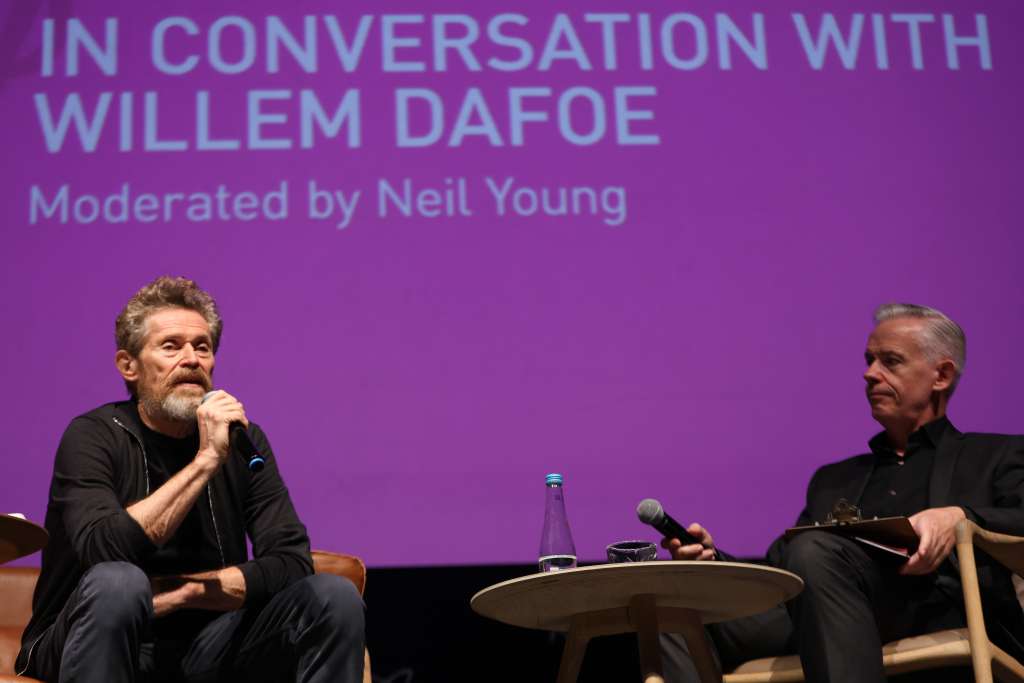
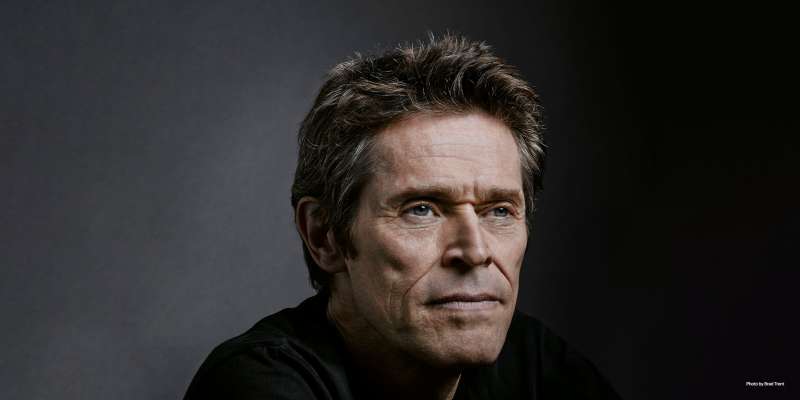
SARAJEVO, August 21 (FENA) - Celebrated as one of our most versatile faces on movie screen, four-time Academy Award nominee, actor Willem Dafoe, held a masterclass this morning in Sarajevo as part of the 31st edition of the Sarajevo Film Festival where he shared his toughts about modern art and cinematography, on film experiences and collaborations with directors, fellow collagues throughout his career and reflections on art today with the festival audience, young talents, film professionals.
Willem Dafoe is also a recipient of the Honorary Heart of Sarajevo at this year's edition of the Sarajevo Film Festival in recognition of his long-lasting contribution to the art of film and will be presented with the award tonight at the Open Air Cinema screening of his latest film.
The Birthday Party, his latest work, which premiered at the Locarno Film Festival, also screens at this year's SFF, as the Wisconsin-born star took on a new challenge, stepping into the exquisite loafers of a self-made Greek billionaire planning an elaborate birthday fete for his daughter.
The masterclass session drew an audience of young filmmakers, students, and cinephiles who listened as Dafoe wove together memories from his early avant-garde theater years with reflections on working with auteurs ranging from Martin Scorsese to Lars von Trier, from Kathryn Bigelow to Robert Eggers. But Dafoe insisted on a point that transcended biography: for him, acting is not about control, but about surrender.
“The unknown is what keeps me alive as an actor,” Dafoe said. “When I step into a role, I don’t want to know everything. I want to be surprised. I want to be changed.”
Speaking about early influences and the theater’s discipline, Dafoe traced his formative years not to Hollywood, but to the experimental theater world of New York in the late 1970s, when he became a founding member of the Wooster Group. The troupe’s emphasis on collective creation and physical rigor shaped his understanding of performance.
“Theater taught me to commit with my whole body,” he recalled. “You don’t hide in the theater. You can’t. That discipline, showing up, being present, rehearsing until the work breathes, has guided everything I’ve done in film.”
He described acting not as a craft of “pretending” but of “embodying,” where physical action leads to emotional truth. “If you do it, you feel it,” he said simply.
That philosophy would later prove crucial in films that demanded both physical extremity and psychological depth, such as Oliver Stone’s Platoon (1986), where Dafoe’s portrayal of Sergeant Elias became one of the defining performances of the Vietnam War on screen.
Reflecting on his collaborations as his personal potential of transformation, Dafoe emphasized again and again that acting is, at its core, relational.
“I am not interested in showing what I can do,” he said. “I’m interested in what happens when I collide with a director, a script, a set of circumstances. That’s when the work becomes alive.”
He spoke with evident fondness of working with Scorsese on The Last Temptation of Christ (1988), a film that provoked controversy but allowed him to probe the human vulnerability of Jesus. “Marty created an atmosphere where faith and doubt could coexist,” Dafoe recalled. “That gave me the freedom to approach Jesus not as an icon, but as a man searching.”
Of Lars von Trier, with whom he made Antichrist (2009) and Nymphomaniac (2013), Dafoe said that he thrives on destabilizing the process.
"He puts you in situations where you don’t know what’s going to happen next. That can be terrifying, but also liberating. He makes you discover parts of yourself you didn’t know existed.”
More recently, with Robert Eggers on The Lighthouse (2019), Dafoe described the claustrophobic set, punishing weather, and archaic dialogue as “a gift.” “It forced me out of any comfort zone. You don’t act that film, you survive it. And in that survival, something raw comes out.”
Touching upon his own vulnerability and taking risks, Dafoe did not shy away from addressing the emotional cost of inhabiting characters.
“You have to expose yourself,” he said. “If you’re protecting yourself, you’re not really there. Risk is essential: risk of failure, risk of looking foolish, risk of losing control. Without that, you’re just repeating tricks.”
He noted that this willingness to risk has made him gravitate toward independent cinema as much as studio projects. While younger audiences might recognize him instantly from blockbusters such as Spider-Man, Dafoe insisted that such roles are only one part of the equation.
“The big films give you visibility, sure,” he said. “But it’s in the smaller films, the stranger films, that you often find freedom. You can reinvent yourself. You can be naked, metaphorically and sometimes literally, and discover something unexpected.”
Speaking about awards, fame, and longevity, having in mind that he received four Oscar nominations during his career, for Platoon, Shadow of the Vampire (2000), The Florida Project (2017), and At Eternity’s Gate (2018), Dafoe acknowledged the recognition with humility but downplayed its significance.
“Of course it’s nice,” he said. “But awards don’t make you a better actor. The work does. The process does. What matters to me is: did I show up fully? Did I give myself over to the role? Did the collaboration create something bigger than myself?”
Just recently, Dafoe turned 70, but he continues to work at a pace that would exhaust actors half his age. The key, he suggested, is curiosity.
“The day I stop being curious is the day I should stop acting. But I’m still hungry. I still want to play. And as long as there are directors and stories that challenge me, I’ll keep going.”
One of the recurring themes of the Sarajevo masterclass was the feeling of being present, not only as an artistic tool but as a philosophy of life.
“Presence means you’re not thinking about how you look, or what people think, or whether you’re good enough,” Dafoe said. “It means you’re here, now, in this moment. That’s the only place where creation happens.”
He connected this to a larger cultural critique, suggesting that contemporary life, dominated by speed and distraction, makes presence harder than ever. “We live in a world where everyone is curating themselves, presenting themselves. But the actor’s job is the opposite: to strip away presentation, just to be.”
Speaking about Sarajevo as a city, as a stage but also equally important, as a symbol of resistance, Dafoe acknowledged the resonance of holding such a conversation in Sarajevo.
The festival, born in wartime and now one of the region’s most significant cultural platforms, embodies resilience and reinvention, themes that echo Dafoe’s own approach to art.
“I admire the spirit of this festival,” he said. “It comes from a place of survival, of people insisting on making art in the face of destruction. That inspires me. It reminds me why we do what we do.”
When asked by young filmmakers what advice he would give, Dafoe’s response was characteristically blunt: “Don’t wait for permission. Do the work. Find collaborators. Make something. And don’t be afraid to fail.”
He stressed that actors should avoid the temptation to chase careers strategically. “If you’re calculating every step, you lose the joy. Let the work lead you. Say yes to what scares you. That’s where the growth is.”
For Dafoe, growth has always meant embracing contradiction, being both mainstream and experimental, revered and controversial, disciplined and reckless. “I don’t want to be pinned down,” he said. “I want to stay open, porous, unfinished.”
As the masterclass drew to a close, Dafoe left the audience with one last reflection: the value of remaining a beginner, no matter how long one has worked.
“Every role is the first role,” he said. “Every time you start again, you don’t know if you can do it. And that’s good. That keeps you humble. That keeps you alive," Dafoe concluded.
(FENA) S. R.